The Last Rites of a boy who was loved
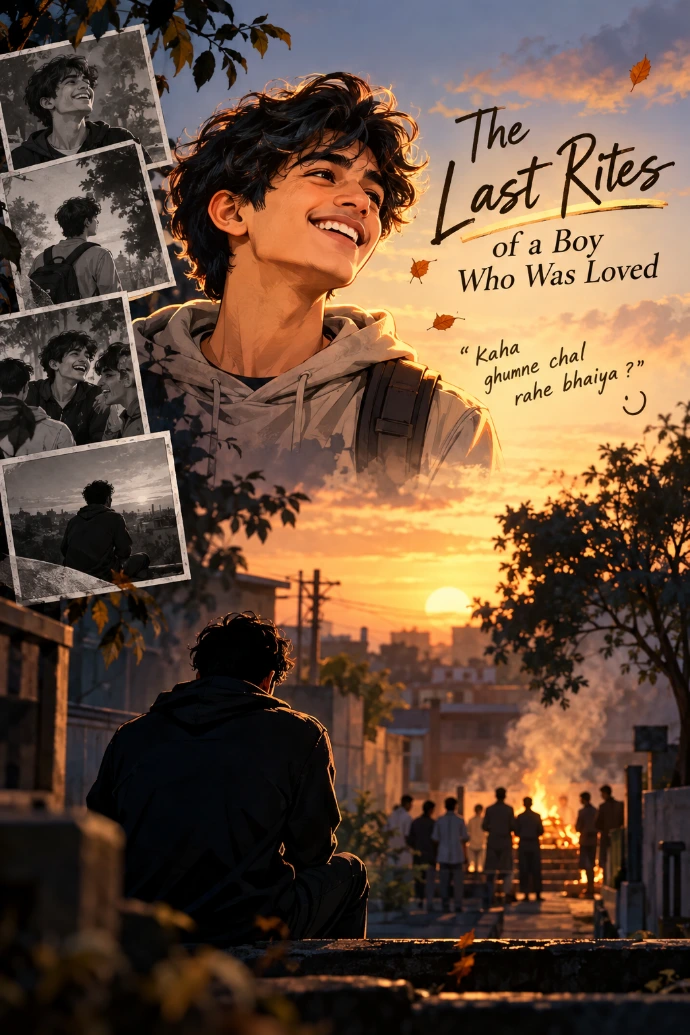
The Last Rites of a boy who was loved
Last rites may not feel as heavy to those who come to attend them. They arrive, stand there, pray, and eventually leave.
But for the people left behind, the weight of those last rites can remain for a lifetime.
Perhaps when someone has been ill for years, when they are very old, or when they have slowly withdrawn from society, people somehow prepare themselves for the possibility of losing them. But when the person is just 18 years old—someone who has just completed school, was socially active, had dreams for his future, was loved by people around him, and was still beginning to understand life—the loss feels impossible to accept.
There was a boy in my colony named Anshu.
He was simple, kind-hearted, and always had a smile.
Whenever we saw each other, we would exchange a smile. Whenever we met, he would often say,
“Kaha ghoomne chal rahe, bhaiya?”
Just a small sentence. Something ordinary.
But sometimes, after someone is gone, ordinary moments become the memories you would give anything to experience once again.
Anshu was only 18.
He had just finished school. He was looking forward to building his career, earning for himself, being a good son, a good elder brother, and a good friend. He was someone people knew, someone people smiled at, someone who seemed to have so much life still waiting for him.
Then, one morning, I received a call from a friend.
At first, I thought he was joking. I even shouted at him, telling him that this was not something to joke about.
But his voice didn't sound like a joke.
Then he said,
“Bhaiya… Anshu ne faansi laga li.”
There was silence.
I didn't know what to say.
I only said,
“Main aa raha hoon.”
The distance between my house and his home that morning wasn't very far.
But somehow, it felt endless.
And when I reached there, I realised it was true.
Anshu was gone.
At his house, I saw his parents broken down in tears. There was helplessness in their eyes—the kind of helplessness that comes when there is nothing left to save and nothing left to take back.
There was only the truth.
And that truth was unbearably heavy.
I stayed through his last rites.
I saw his face.
There was still something familiar about his expression—almost like the smile I had seen so many times before.
But this time, there was no life behind it.
His friends were there too.
And perhaps the hardest part was that none of us knew why.
We had no answer.
No warning that made sense.
No final conversation that explained everything.
And standing there, I realised something frightening about human beings:
Sometimes people become so good at hiding their pain that even the people standing closest to them may never realise how much they are suffering.
We lost Anshu.
That is a fact we cannot change.
We may spend years trying to understand what happened inside his mind. We may never completely solve that mystery.
But understanding the reason won't bring him back.
And perhaps that is the cruelest part.
I keep thinking…
What if someone had simply asked him, “Bhai, tu theek hai?”
What if he had talked?
What if someone had noticed something behind that smile?
What if, for just one moment, he had felt that whatever he was going through didn't have to be faced alone?
Maybe nothing would have changed.
Maybe everything would have.
We will never know.
But perhaps that's the lesson we should take from losing him.
Not every smile means someone is okay.
Not every “I'm fine” means everything is fine.
And sometimes, asking someone twice can matter more than we realise.
If someone around you suddenly becomes quiet, distant, or different, don't always wait for them to come and talk.
Go to them.
Ask.
Listen.
And if you're the one carrying something you cannot explain, please don't carry it completely alone.
You don't have to solve your entire life tonight.
Sometimes, the first step is simply telling someone:
“Bhai, mujhe baat karni hai.”
Anshu cannot come back.
But perhaps his story can remind us to notice the people who are still here.
May he rest in peace.
And may those who loved him find the strength to live with the questions that will never have answers.